Economy

Impact is not charity. It is economics. When you build the value chain locally, end to end, you do not just sell fuel—you build an economy.

Wealth That Leaves the Continent

Africa's charcoal industry generates billions in revenue annually, yet the vast majority of economic value leaks out of local communities. Traditional charcoal production is dominated by informal, fragmented supply chains where middlemen capture most of the margin while the people who do the hardest work—harvesting, burning, transporting—earn the least.

In Benin, the charcoal economy sustains hundreds of thousands of families, yet most remain trapped in subsistence—earning just enough to survive, never enough to thrive. An addressable market measured in the hundreds of millions of dollars exists. The demand is proven. What has been missing is a model that keeps the value where it belongs: in the hands of the people who create it.

An economy that extracts from its people is not an economy. It is exploitation with better packaging.
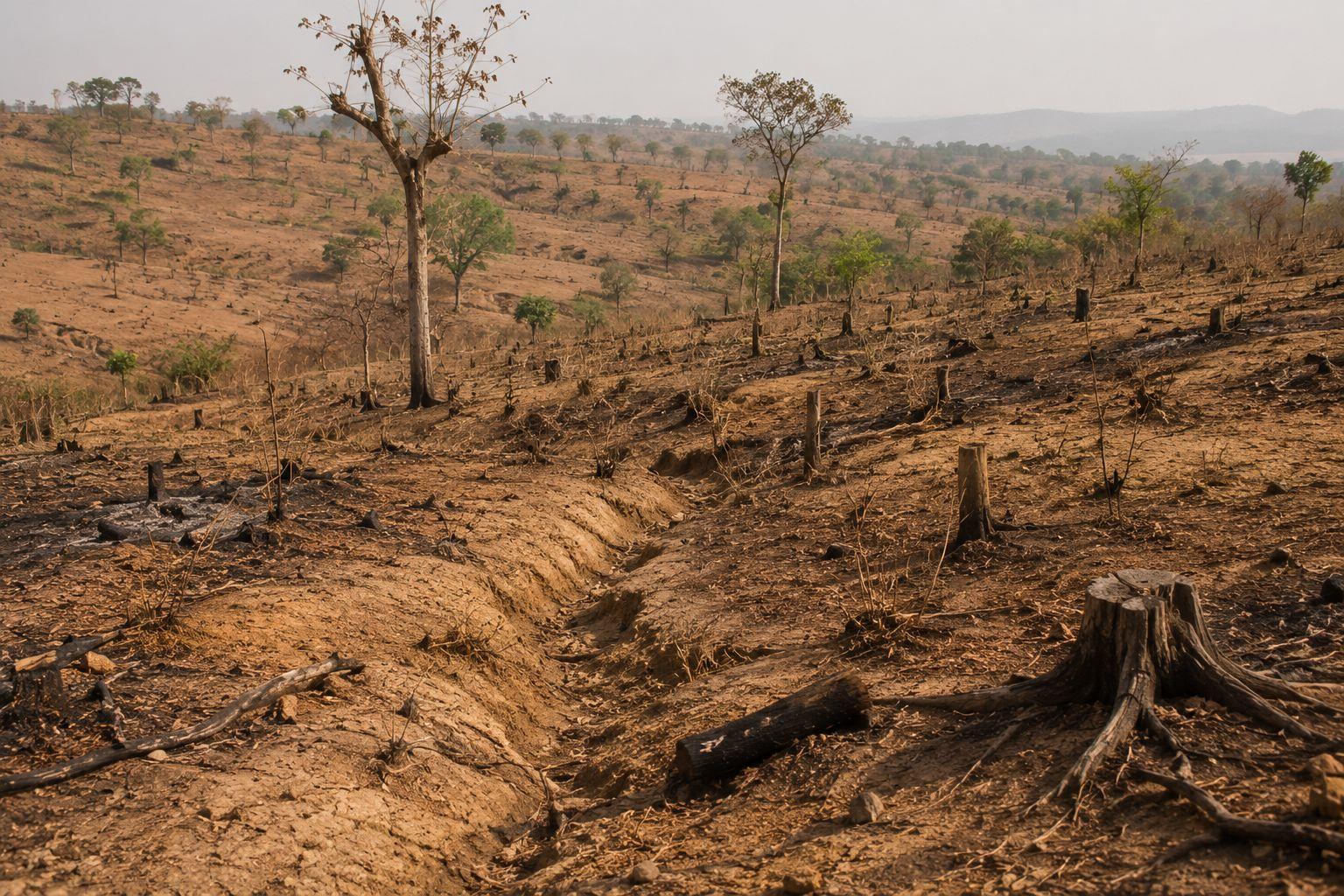

Degraded landscape from traditional harvesting practices

Value Chain Ownership

VieVert is built to own the value chain end-to-end—from bamboo cultivation through processing to distribution. This is not a statistic. It is a philosophy. When you own the chain, you control where the value goes. And we direct it into local jobs, farmer partnerships, and community infrastructure.

Our internal modeling, at scale of production, points to unit economics well above clean-cooking industry benchmarks—strong customer lifetime value against low acquisition costs. We share the full model with qualified investors under NDA. This is not marginal improvement. It is a fundamentally different economic architecture—designed for rapid household payback and a clear path to profitability at scale of production.

Every bamboo farmer who partners with VieVert gains access to a guaranteed buyer, fair pricing, and training that increases their productivity. Every job we create stays local. Every dollar of revenue circulates within the community before it leaves.

Bamboo cultivation creating local economic value

Economy by the Numbers

100%
Value chain built locally—from plantation to household
3-5
Years to first harvest—then annual regenerative income for farmers
200+
Local jobs targeted across farming, production, and distribution

How We Build Wealth

Farmer Partnerships

Guaranteed purchase agreements with fair pricing give farmers income security while our training programs increase yields. Farmers earn more per acre with bamboo than traditional crops, creating lasting economic uplift for entire households.

Local Manufacturing

Our pyrolysis processing and briquette manufacturing facilities create skilled jobs in Benin. Rigorous, data-driven quality control ensures world-class standards while building local technical expertise that elevates the entire workforce.

Revenue That Stays

Three diversified revenue streams—clean cooking fuel, eco-products, and carbon credits—create economic resilience. Multiple income sources mean the local economy does not depend on a single commodity or market cycle.

Scalable Prosperity

As VieVert expands across Francophone West Africa, our economic model replicates—each new market creates the same local value chain ownership, the same job creation, the same farmer partnerships. Growth means prosperity that spreads, not concentrates.

Build an Economy That Lasts

Every dollar invested in VieVert multiplies through local value chains—creating jobs, empowering farmers, and building economic infrastructure that outlasts any single project. Join us in proving that profit and purpose are the same thing.